
Call Us: +27 63 169 8798

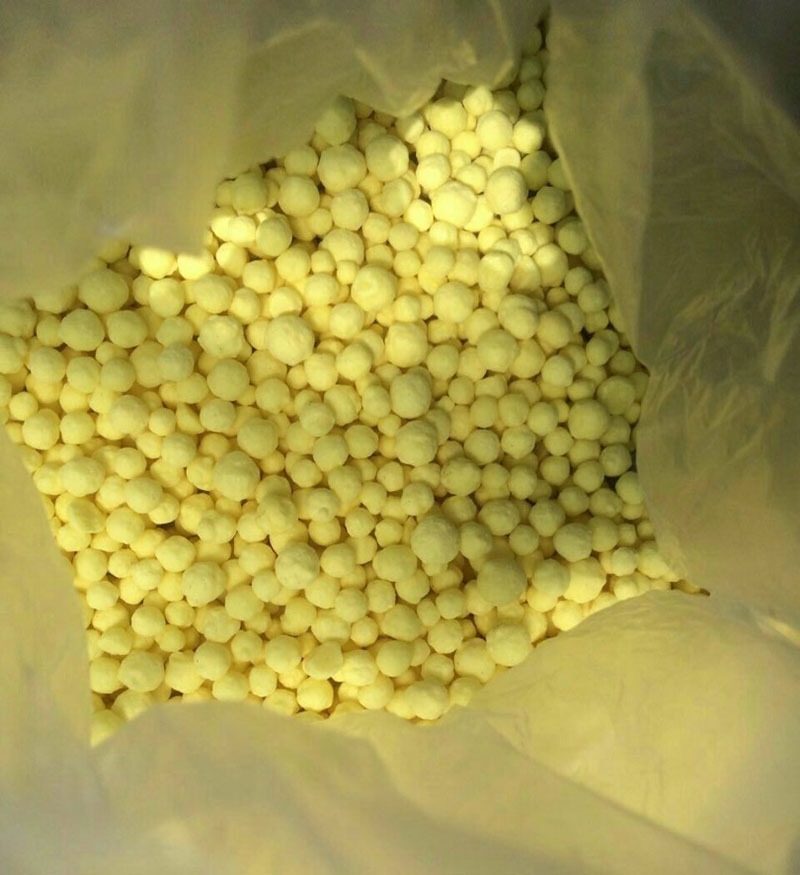

What Is Sulfur Used For?
Sulfur is used extensively in fertilizer production, agriculture, sulfuric acid manufacturing, rubber processing, mining, and chemical manufacturing. It is an important industrial raw material as well as an essential plant nutrient.
One of sulfur’s most important commercial applications is the production of sulfuric acid. In agriculture, sulfur is also used in fertilizers and soil management, while the rubber industry uses elemental sulfur during vulcanization.
Granular sulfur is particularly suitable for bulk handling, transportation, fertilizer production, and large-scale industrial applications.
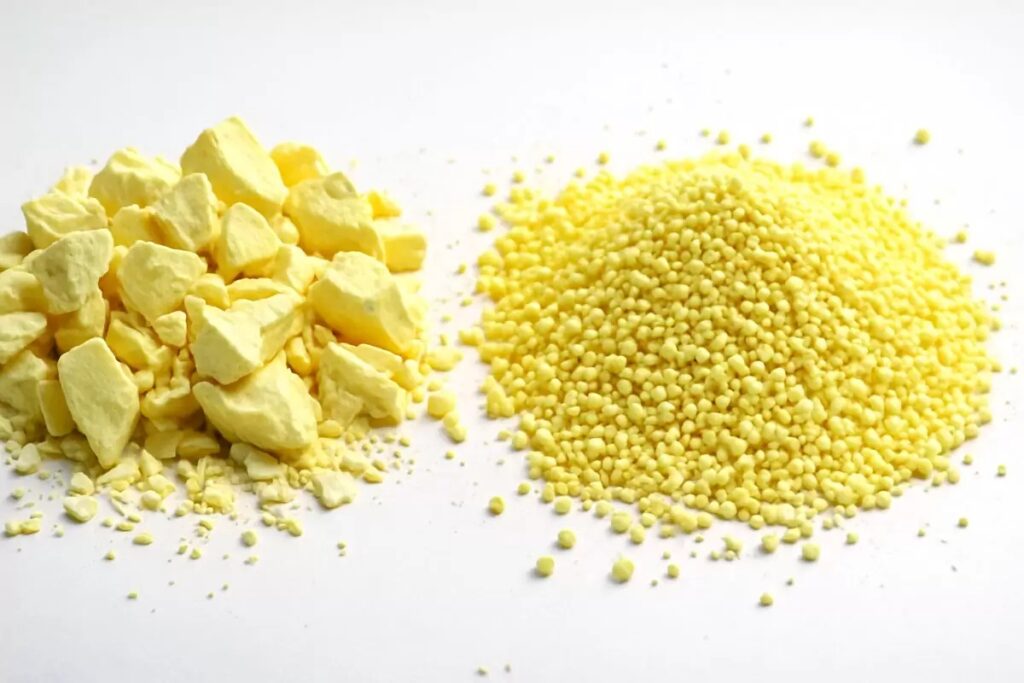
What Is Sulfur?
Sulfur is a naturally occurring non-metallic chemical element represented by the symbol S and atomic number 16.
In its elemental form, sulfur is typically a bright yellow solid. Commercial sulfur is available in several physical forms, including:
- Granular sulfur
- Powdered sulfur
- Pastilles
- Prilled sulfur
- Molten sulfur
The appropriate form depends on the intended agricultural or industrial application.
What Is Sulfur Used For?
The major uses of sulfur include:
- Sulfuric acid production
- Fertilizer manufacturing
- Crop nutrition
- Soil pH management
- Rubber vulcanization
- Mining and mineral processing
- Chemical manufacturing
- Agricultural fungicides
- Pulp and paper processing
- Various industrial manufacturing processes
Let’s examine the most important applications.
1. Sulfur for Sulfuric Acid Production
One of the most important answers to “what is sulfur used for?” is sulfuric acid manufacturing.
Elemental sulfur is a major feedstock for producing sulfuric acid (H₂SO₄), one of the world’s most important industrial chemicals.
Sulfuric acid is subsequently used in:
- Fertilizer manufacturing
- Phosphate processing
- Mineral extraction
- Petroleum refining
- Metal processing
- Chemical manufacturing
- Water and wastewater treatment
Therefore, demand for elemental sulfur is closely connected to several major industrial sectors.
2. Sulfur in Fertilizer Manufacturing
The fertilizer industry is one of the largest consumers of sulfur and sulfur-derived chemicals.
Sulfuric acid produced from elemental sulfur is particularly important in processing phosphate rock to manufacture phosphate fertilizers.
Sulfur is also associated with fertilizers such as:
- Ammonium sulfate
- Single superphosphate
- Sulfur-enhanced fertilizers
- Elemental sulfur fertilizers
Consequently, sulfur plays an important role throughout the global fertilizer supply chain.
3. What Is Sulfur Used For in Agriculture?
Sulfur is an essential plant nutrient.
Plants require sulfur for important biological functions, including the formation of certain amino acids, proteins, and enzymes.
Sulfur fertilization can be particularly relevant where soils have insufficient plant-available sulfur.
Agricultural applications include:
- Crop nutrition
- Sulfur fertilizer production
- Soil amendments
- Fertilizer blending
- Management of alkaline soils
- Certain crop-protection applications
4. Sulfur for Soil pH Management
Elemental sulfur is sometimes used to help reduce the pH of alkaline soils.
However, elemental sulfur does not instantly acidify soil.
Soil microorganisms gradually oxidize elemental sulfur, producing acidity and ultimately sulfate forms. Therefore, the effect depends on factors such as:
- Soil temperature
- Moisture
- Microbial activity
- Particle size
- Existing soil pH
- Application rate
Agricultural users should base sulfur applications on soil analysis and professional agronomic recommendations.
5. Sulfur for Plant Nutrition
Sulfur is an essential macronutrient for plants.
It contributes to processes associated with:
- Protein synthesis
- Amino acid formation
- Enzyme activity
- Chlorophyll-related plant functions
- Crop development
Plants primarily absorb sulfur from soil in the sulfate form.
Elemental sulfur must therefore undergo oxidation before its sulfur becomes readily available for plant uptake.
6. Sulfur in Rubber Manufacturing
Sulfur has another major industrial application: rubber vulcanization.
Vulcanization uses sulfur to form cross-links between rubber polymer chains.
This process can improve important properties of rubber, including:
- Elasticity
- Strength
- Durability
- Heat resistance
- Wear resistance
Sulfur vulcanization is important in manufacturing products such as tires, industrial rubber components, hoses, and seals.
7. Sulfur in Mining and Mineral Processing
Sulfur-derived chemicals, particularly sulfuric acid, are extensively used in mining and mineral processing.
Applications can include:
- Ore processing
- Mineral leaching
- Metal extraction
- pH adjustment
- Hydrometallurgical processes
Copper and other non-ferrous metal operations are among the industries where sulfuric acid can play an important processing role.
8. Sulfur in Chemical Manufacturing
Sulfur is an important raw material for the broader chemical industry.
Sulfur and sulfur-derived compounds are involved in manufacturing numerous products and intermediates used across industrial supply chains.
Applications extend into:
- Industrial chemicals
- Detergent intermediates
- Pigments
- Specialty chemicals
- Petroleum processing
- Pulp and paper
- Metal treatment
This makes sulfur important far beyond its direct use as a yellow elemental solid.
9. Sulfur as a Fungicide
Elemental sulfur has a long history of agricultural use in certain fungicide and crop-protection applications.
Sulfur-based products may be used against particular fungal diseases and some mites, depending on the crop, formulation, and local pesticide regulations.
Agricultural users should always follow the registered product label and applicable regulations rather than applying industrial-grade sulfur directly as a crop-protection product.
Why Is Granular Sulfur Widely Traded?
Granular sulfur is one of the common forms used in international industrial trade.
Compared with very fine sulfur powder, granules can provide advantages for:
- Bulk handling
- Transportation
- Storage
- Industrial processing
- Fertilizer manufacturing
- Large-volume commercial supply
The required sulfur purity, particle size, and other specifications depend on the intended application.
Granular Sulfur vs Powdered Sulfur
Although both products contain elemental sulfur, their physical properties make them suitable for different applications.
| Property | Granular Sulfur | Powdered Sulfur |
| Particle Form | Granules | Fine powder |
| Bulk Handling | Excellent | More challenging |
| Dust Generation | Lower | Higher |
| Large-Scale Transport | Well suited | Application dependent |
| Fertilizer Manufacturing | Common | Common for selected formulations |
| Industrial Processing | Widely used | Application specific |
Commercial buyers should select sulfur according to the technical requirements of their manufacturing process.
Who Buys Sulfur in Bulk?
Bulk sulfur buyers commonly include:
- Fertilizer manufacturers
- Sulfuric acid producers
- Chemical manufacturers
- Mining companies
- Agricultural distributors
- Rubber manufacturers
- Industrial processors
- Commodity traders
Specifications can vary significantly between these industries. Buyers should therefore provide their required purity, particle size, quantity, and application when requesting quotations.
Buying Granular Sulfur in Bulk
When sourcing granular sulfur, commercial buyers should evaluate:
- Sulfur purity
- Moisture
- Ash content
- Acidity
- Particle size
- Product origin
- Packaging
- Certificate of Analysis
- Safety Data Sheet
- Shipping terms
For commercial purchasing information, specifications, and availability, visit our Granular Sulfur product page.
Bulk quantities are available for fertilizer manufacturers, agricultural distributors, and industrial buyers.
Frequently Asked Questions
What is sulfur used for?
Sulfur is primarily used in sulfuric acid and fertilizer manufacturing. It is also used in agriculture, rubber vulcanization, mining, chemical manufacturing, and certain crop-protection applications.
What is sulfur used for in agriculture?
Sulfur is used as a plant nutrient, fertilizer ingredient, and soil amendment. Elemental sulfur can also help reduce the pH of alkaline soils after biological oxidation.
What is the biggest industrial use of sulfur?
One of the largest and most important industrial uses of elemental sulfur is the production of sulfuric acid, which is subsequently used extensively in fertilizer manufacturing and numerous industrial processes.
Why is sulfur used in fertilizer?
Sulfur itself is an essential plant nutrient. In addition, sulfuric acid derived from elemental sulfur plays a major role in manufacturing phosphate and other fertilizers.
What is granular sulfur used for?
Granular sulfur is used in fertilizer manufacturing, sulfuric acid production, agriculture, and other industrial processes. Its granular form is particularly suitable for bulk handling and transportation.
Is sulfur used to make rubber?
Yes. Elemental sulfur is used during rubber vulcanization to form cross-links between polymer chains, helping improve rubber’s strength, elasticity, and durability.
Can sulfur lower soil pH?
Elemental sulfur can contribute to lowering alkaline soil pH after soil microorganisms oxidize it. The rate and extent of the effect depend on soil conditions, sulfur particle size and application rate.
Where can I buy sulfur in bulk?
Industrial and agricultural buyers can source granular sulfur from specialist chemical, mineral and fertilizer raw-material suppliers. Buyers should compare purity, particle size, COA, packaging, shipping terms and product origin before ordering.
Conclusion
So, what is sulfur used for?
Sulfur has applications across agriculture and some of the world’s largest industrial sectors. Its most important role is as a raw material for sulfuric acid and fertilizer production, while elemental sulfur is also valuable for crop nutrition, soil management, rubber vulcanization, chemical manufacturing, and other industrial processes.
For agricultural and industrial buyers, granular sulfur provides a convenient form for bulk transportation, storage, and processing.
Businesses looking for commercial quantities can visit our Granular Sulfur product page for specifications, packaging, COA, and bulk supply enquiries.
