
Call Us: +27 63 169 8798


Will Calcium Hypochlorite Raise pH?
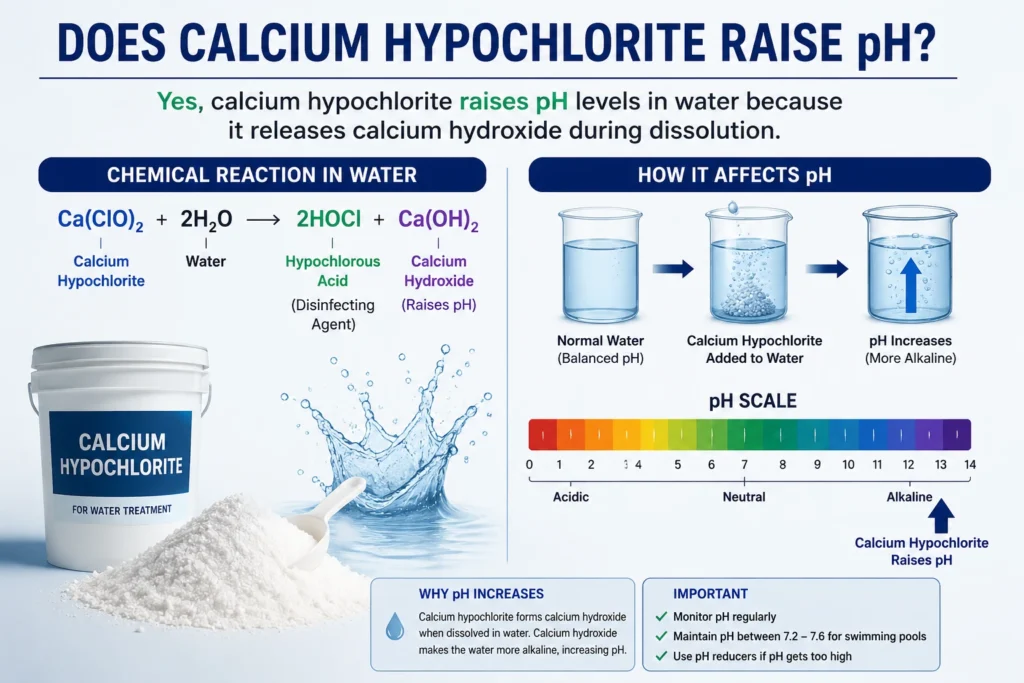
Yes, calcium hypochlorite can initially raise the pH of water because it is an alkaline chlorine compound. When calcium hypochlorite dissolves, it creates alkaline conditions while releasing the chlorine species responsible for disinfection.
However, the complete effect is more complicated than simply saying that calcium hypochlorite permanently raises pH. As chlorine is consumed during disinfection and oxidation, subsequent chemical reactions can offset part of the initial pH increase.
For swimming pools, drinking water, wastewater, and industrial water treatment, the practical approach is to test and monitor pH before and after calcium hypochlorite dosing rather than assume a fixed pH increase.
Will Calcium Hypochlorite Raise pH?
Yes, calcium hypochlorite can initially raise the pH of water because it is an alkaline chlorine compound. When calcium hypochlorite dissolves, it creates alkaline conditions while releasing the chlorine species responsible for disinfection.
However, the complete effect is more complicated than simply saying that calcium hypochlorite permanently raises pH. As chlorine is consumed during disinfection and oxidation, subsequent chemical reactions can offset part of the initial pH increase.
For swimming pools, drinking water, wastewater, and industrial water treatment, the practical approach is to test and monitor pH before and after calcium hypochlorite dosing rather than assume a fixed pH increase.
What Is Calcium Hypochlorite?
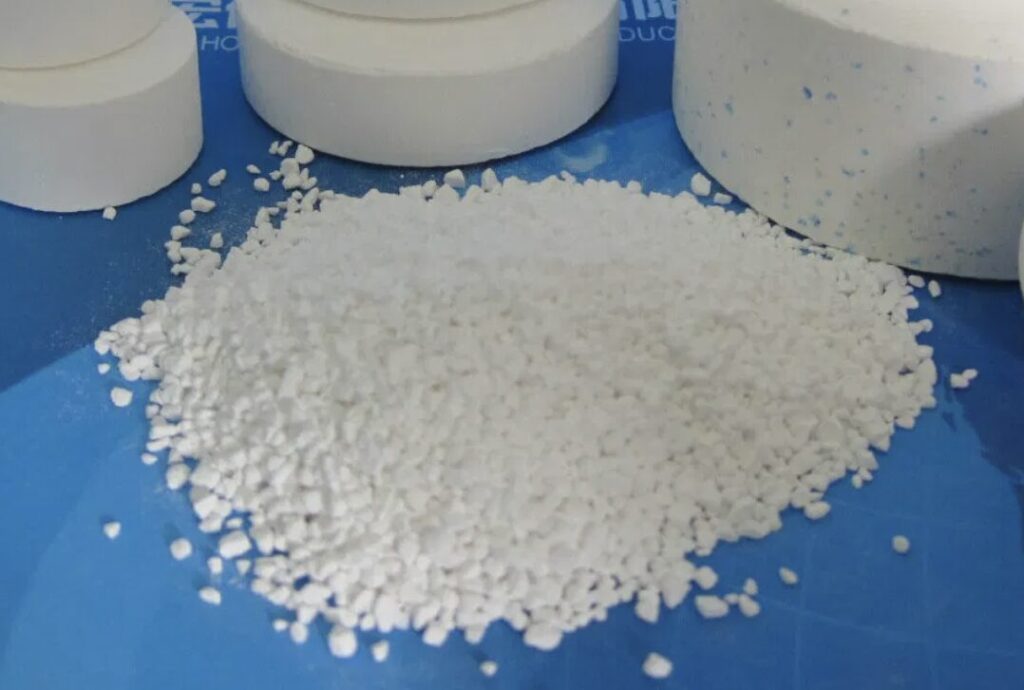
Calcium hypochlorite is an inorganic chlorine compound with the chemical formula Ca(ClO)₂.
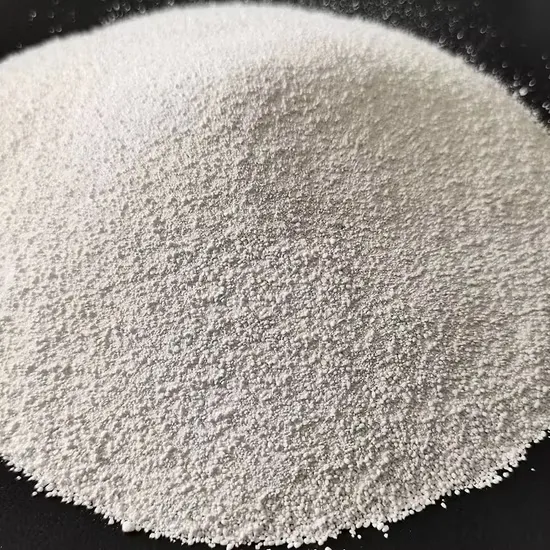
It is commonly supplied as white or off-white granules, powder, or tablets, depending on the grade and intended application.
Calcium hypochlorite is widely used for:
- Drinking water disinfection
- Swimming pool sanitation
- Wastewater treatment
- Industrial water treatment
- Emergency water disinfection
- Industrial sanitation
When added to water, calcium hypochlorite releases chlorine species, including hypochlorous acid, that provide its disinfecting action.
Calcium hypochlorite is inherently alkaline.
Commercial calcium hypochlorite products commonly produce alkaline solutions when dissolved in water. Therefore, adding the chemical can cause an initial increase in water pH.
The size of that increase depends on several factors, including:
- Calcium hypochlorite dosage
- Initial water pH
- Total alkalinity
- Water chemistry
- Chlorine demand
- Treatment conditions
- Other chemicals present
This means there is no universal rule stating that a particular dose of calcium hypochlorite will increase pH by a specific number of units.
Not necessarily.
This is where the chemistry is frequently oversimplified.
Calcium hypochlorite can cause an immediate upward movement in pH when it is introduced because the product is alkaline.
However, chlorine subsequently reacts with microorganisms, organic matter, reducing compounds, and other substances in the water.
These downstream reactions influence the overall acid-base balance.
Therefore, it is useful to distinguish between:
Initial effect: Calcium hypochlorite can raise pH when added.
Longer-term net effect: The final pH depends on chlorine consumption, water chemistry, alkalinity, aeration, and other treatment conditions.
For this reason, operators should rely on actual water testing rather than assuming that every calcium hypochlorite treatment will produce the same permanent increase in pH
What Is the pH of Calcium Hypochlorite?
Calcium hypochlorite is an alkaline product.
Concentrated calcium hypochlorite solutions typically have a high pH, although the exact value depends on product concentration, formulation, purity, temperature, and testing conditions.
This alkaline nature explains why freshly dosed water can experience an increase in pH.
However, the pH of a concentrated calcium hypochlorite solution is not the same as the final pH of treated water.
Once the product is diluted into a much larger volume of water, the resulting pH depends on the chemistry of the entire system.
Will Calcium Hypochlorite Raise Pool pH?
Calcium hypochlorite, commonly called cal hypo, can cause pool pH to rise initially after dosing.
The extent of the change depends heavily on the pool’s existing water balance.
Pool operators should monitor:
- pH
- Free chlorine
- Total alkalinity
- Calcium hardness
- Stabilizer levels where applicable
Another important consideration is that calcium hypochlorite adds calcium to the water.
Repeated use can therefore increase calcium hardness.
In water that already contains high calcium concentrations, excessive calcium hardness combined with unfavorable pH conditions can increase the potential for scale formation.
Does Calcium Hypochlorite Increase Alkalinity?
The relationship between calcium hypochlorite and total alkalinity should not be confused with its immediate effect on pH.
pH measures the current hydrogen-ion activity of the water, whereas total alkalinity describes the water’s capacity to resist changes in pH.
Adding an alkaline chlorinating product can temporarily affect water chemistry, but operators should not assume that a rise in pH means total alkalinity has increased by an equivalent amount.
pH and total alkalinity should be measured separately.
Does Calcium Hypochlorite Increase Calcium Hardness?
Yes. This is an important characteristic of calcium hypochlorite.
Because the compound contains calcium, repeated dosing introduces calcium ions into the water.
This can gradually increase calcium hardness.
That may not be problematic when the starting calcium concentration is low or moderate. However, in hard-water systems or pools already approaching their recommended calcium range, continued calcium hypochlorite use requires closer monitoring.
High calcium hardness combined with unsuitable pH and alkalinity can contribute to:
- Scale formation
- Deposits on surfaces
- Scaling of pipes
- Reduced heat-transfer efficiency
- Equipment deposits
How Does pH Affect Chlorine Disinfection?
pH is important because it influences the equilibrium between different chlorine species in water.
Hypochlorous acid is a particularly effective disinfecting form of free chlorine.
As pH increases, the balance shifts toward a greater proportion of hypochlorite ion.
Therefore, excessively high pH can reduce the proportion of free chlorine present as hypochlorous acid.
Maintaining an appropriate pH is consequently important for efficient chlorination and overall water-treatment performance.
👉 Learn more about our
Calcium Hypochlorite for Water Purification product page
Calcium Hypochlorite for Water Purification product page
Calcium Hypochlorite in Drinking Water Treatment
Calcium hypochlorite is widely used as a chlorine source for drinking-water disinfection.
When properly applied, it can help control:
- Bacteria
- Viruses
- Algae
- Other susceptible microorganisms
Water treatment operators must carefully control dosage, contact time, residual chlorine, pH, and other treatment parameters according to applicable drinking-water standards.
Because calcium hypochlorite can initially affect pH, operators should monitor treated water rather than relying solely on the chemical’s theoretical behavior.
👉 Read more about
Uses of Calcium Hypochlorite
Uses of Calcium Hypochlorite
Calcium Hypochlorite in Wastewater Treatment
Wastewater facilities can also use calcium hypochlorite for disinfection.
Wastewater chemistry can vary considerably because of differences in:
- Organic matter
- Suspended solids
- Ammonia
- Industrial contaminants
- pH
- Alkalinity
- Chlorine demand
These variables influence both chlorine performance and the final pH.
Therefore, wastewater operators should establish dosage according to the actual treatment requirements.
Calcium Hypochlorite in Industrial Water Treatment
Industrial facilities use calcium hypochlorite for applications such as:
- Process-water disinfection
- Cooling-water treatment
- Industrial sanitation
- Water storage systems
- Wastewater disinfection
The required chlorine concentration and pH conditions vary by application.
Industrial operators should therefore follow site-specific water-treatment procedures and applicable technical standards.
What Happens if pH Becomes Too High?
Excessively high pH can create several water-treatment problems.
Depending on the application, these can include:
- Reduced proportion of hypochlorous acid
- Increased scale potential
- Mineral precipitation
- Reduced treatment efficiency
- Equipment deposits
- Water-balance problems
This is why pH monitoring is an important part of chlorination programs.
How to Manage pH When Using Calcium Hypochlorite
Do not automatically add a pH reducer simply because calcium hypochlorite has been used.
Test the water first.
A better operating procedure is:
- Measure the initial water pH.
- Determine the appropriate calcium hypochlorite dose.
- Apply the product according to treatment procedures.
- Allow adequate mixing and contact time.
- Retest pH and chlorine levels.
- Adjust pH only when testing shows that correction is necessary.
For municipal and industrial treatment systems, chemical dosing should be based on established operating procedures and water-quality testing.
Calcium Hypochlorite vs Sodium Hypochlorite
Both calcium hypochlorite and sodium hypochlorite are chlorine-based disinfectants, but they differ in physical form and the additional ions introduced into the water.
| Property | Calcium Hypochlorite | Sodium Hypochlorite |
| Common Name | Cal Hypo | Liquid Chlorine / Bleach |
| Typical Form | Granules, Powder, Tablets | Liquid |
| Chemical Formula | Ca(ClO)₂ | NaClO |
| Initial Effect | Alkaline | Alkaline |
| Adds Calcium | Yes | No |
| Main Function | Chlorination & Disinfection | Chlorination & Disinfection |
| Storage | Dry product | Liquid solution |
The best product depends on treatment infrastructure, water chemistry, storage requirements, transportation, dosage systems, and application.
Calcium Hypochlorite for Water Treatment
Despite the need to monitor pH, calcium hypochlorite remains an important water-treatment chemical because it provides an effective source of available chlorine.
Applications include:
- Municipal drinking water
- Swimming pools
- Wastewater
- Industrial water
- Emergency water treatment
- Sanitation systems
For commercial applications, product grade, available chlorine content, packaging, storage requirements, and regulatory compliance should be evaluated before purchase.
Learn more about our Calcium Hypochlorite for Drinking Water Treatment for specifications and bulk supply information.
Frequently Asked Questions
Will calcium hypochlorite raise pH?
Yes, calcium hypochlorite can initially raise water pH because it is an alkaline chlorine compound. However, the final net effect depends on chlorine consumption, alkalinity, and overall water chemistry.
Does calcium hypochlorite raise or lower pH?
Immediately after dosing, calcium hypochlorite generally has an upward effect on pH. Subsequent chlorine reactions can offset part of this increase, so the final pH should be determined through testing.
Does cal hypo raise pool pH?
Cal hypo can cause an initial rise in pool pH. The actual change depends on dosage and existing pool-water chemistry.
What is the pH of calcium hypochlorite?
Calcium hypochlorite produces alkaline solutions. The exact pH varies according to product concentration, formulation, temperature, and measurement conditions.
Does calcium hypochlorite increase calcium hardness?
Yes. Calcium hypochlorite introduces calcium into the water, so repeated use can increase calcium hardness.
Does calcium hypochlorite increase alkalinity?
Its immediate effect on pH should not be treated as equivalent to a proportional increase in total alkalinity. pH and total alkalinity measure different aspects of water chemistry and should be tested separately.
Why is pH important when using calcium hypochlorite?
pH affects chlorine speciation and treatment performance. At higher pH, a smaller proportion of free chlorine exists as hypochlorous acid, an effective disinfecting form of chlorine.
Should I lower pH after adding calcium hypochlorite?
Only when water testing shows that pH is above the appropriate operating range. Do not automatically add acid or another pH reducer without testing the water.
Conclusion
So, will calcium hypochlorite raise pH?
Yes, calcium hypochlorite can initially raise water pH because it is alkaline. However, the final pH effect is more complex because chlorine is subsequently consumed through disinfection and oxidation reactions.
For swimming pools, drinking-water facilities, wastewater plants, and industrial systems, the most reliable approach is to monitor pH, chlorine concentration, alkalinity, and calcium hardness as appropriate for the application.
Calcium hypochlorite remains an effective chlorine-based disinfectant, but correct dosing and water-chemistry control are essential for effective treatment.